

PLACEMAKING STRATEGY | A COMMUNITY OF DEVELOPMENTS
COROMANDEL ON CAMBIE
Coromandel Properties was developing five projects along the Cambie Corridor, spanning rental, co-housing, luxury, and mixed-use typologies across multiple ownership groups. While the sites were connected by transit, they were distributed across two distinct neighbourhoods, each with its own character, scale, and pace of life.
The strategic challenge was not simply differentiation, but how to unify geographically dispersed projects under a single narrative and programmatic framework—creating cohesion across the corridor while allowing each development to respond meaningfully to its local context.
MARKET INSIGHTS
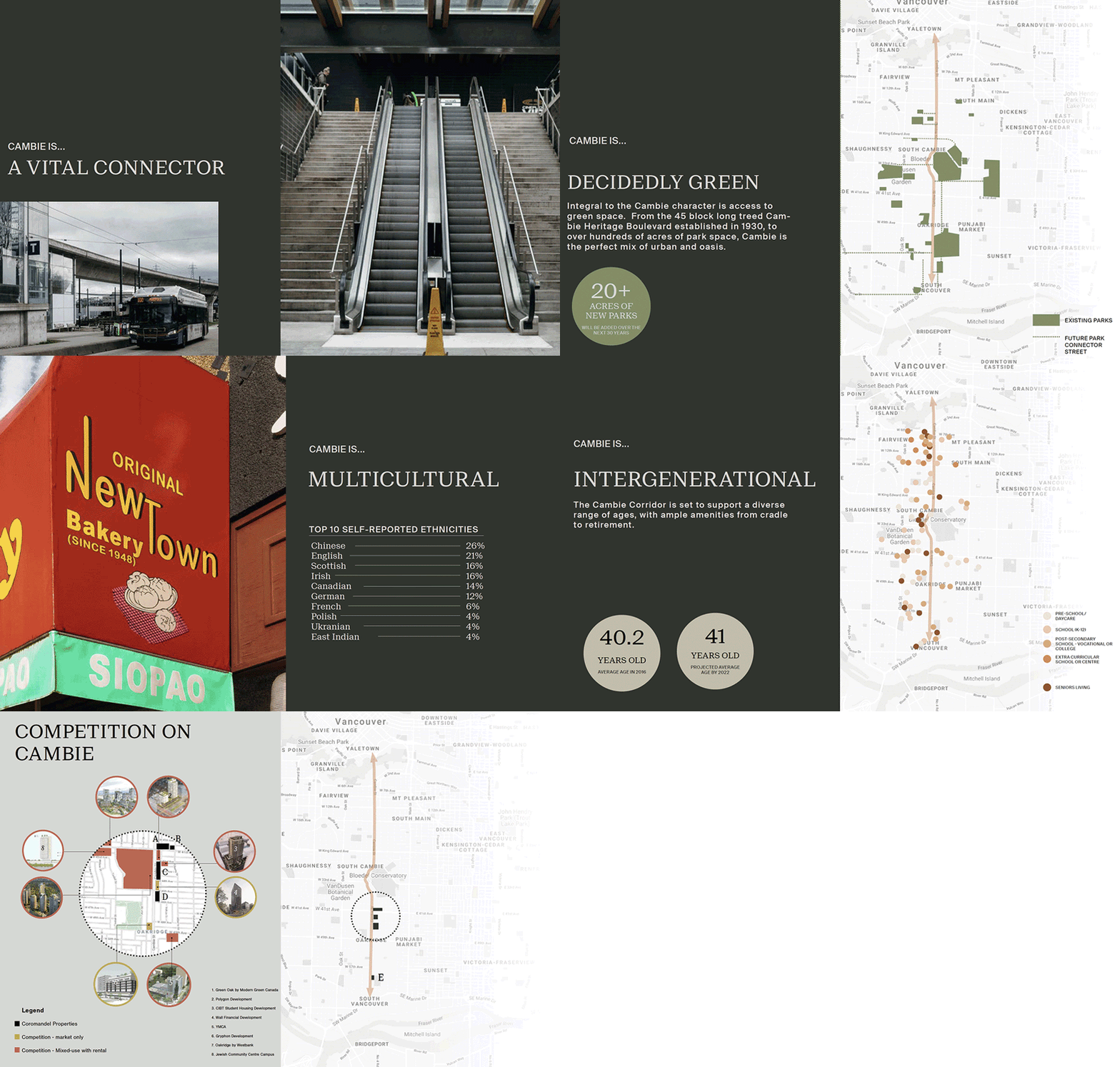
Market analysis reframed Cambie not as a collection of isolated sites, but as a connective spine—linking neighbourhoods, daily rituals, and lifestyles. Rather than forcing uniformity, the strategy focused on shared values and amenity programming that could scale and adapt across locations.
LIFE ON CAMBIE
One Vision, Multiple Expressions
Rather than treating each site as a standalone development, the strategy approached Cambie as a connected ecosystem—a place shaped by daily movement, shared rituals, and overlapping communities. Life on Cambie became the organizing narrative: a placemaking framework that unified the five projects through a shared point of view, while allowing for variation across scale, location, and product type.
This positioning enabled Coromandel to move beyond a collection of buildings toward a cohesive community identity. It provided a clear lens through which brand expression, amenity planning, and experience design decisions could be made consistently across the corridor—without forcing uniformity.

Placemaking Through Program and Experience
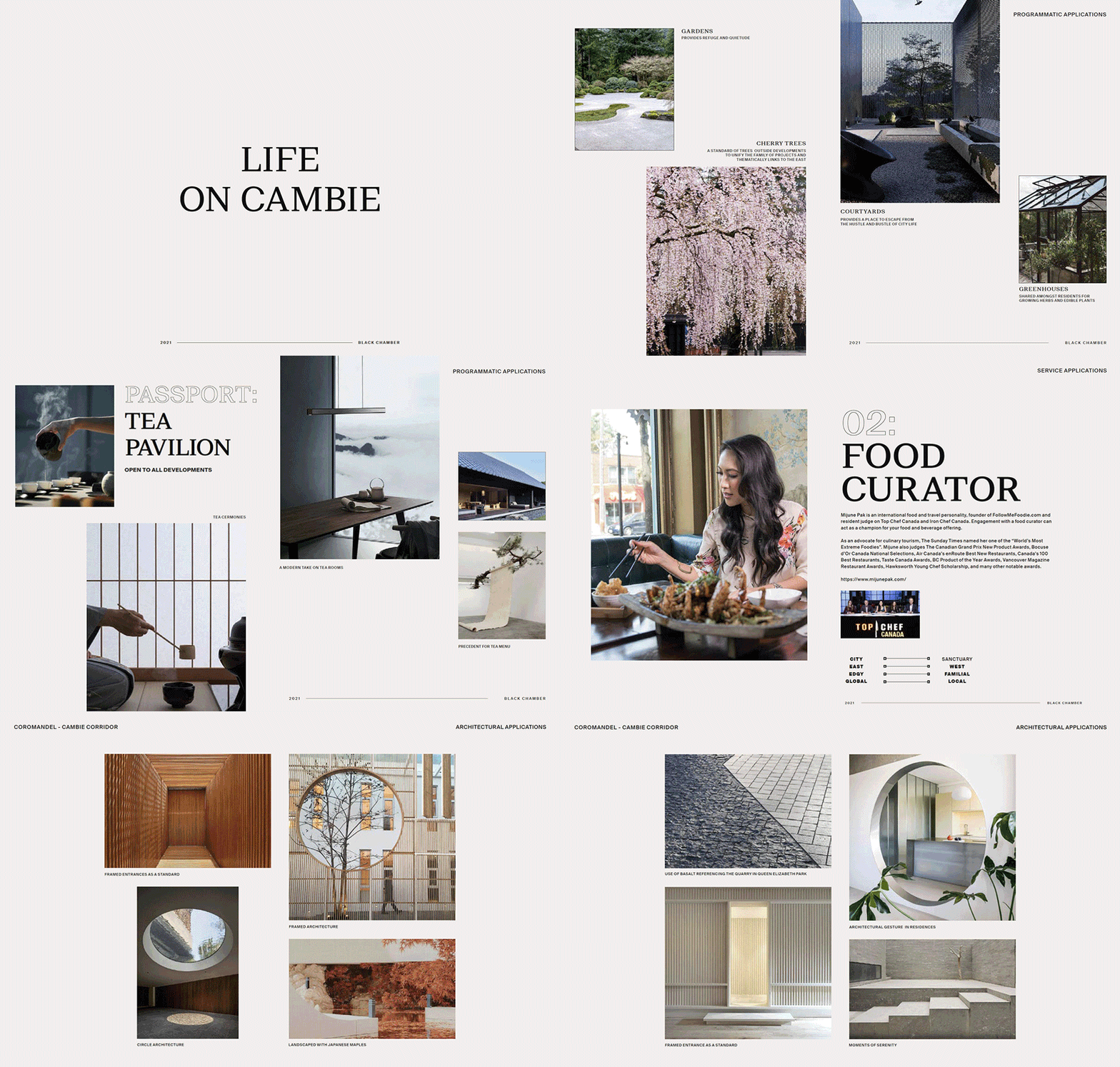
From this narrative emerged a scalable placemaking strategy rooted in shared amenities and experiences. Programmatic ideas were designed to flex across sites and building sizes, allowing residents to access experiences beyond their individual buildings while reinforcing a sense of connection across the corridor.
A collective membership model encouraged movement between sites, fostering a broader community beyond any single address. Rather than duplicating amenities at each development, the strategy prioritized complementary offerings—strengthening the corridor as a whole while enhancing the value of each individual project.
This placemaking approach also informed architectural and interior design principles, shaping the look, feel, and character of shared spaces across the portfolio. Each project expressed its own identity while remaining legible as part of a larger system, ensuring continuity and brand coherence as the developments came to life over time.
PROJECT CREDITS
In collaboration with McKinley Studios